The touch MacBook Pro is the Mac's iPhone moment, and the OLED premium is a hard sell
Dynamic Island and a touchscreen show Apple pulling the Mac toward iPhone logic. The extra €400 to €500 for OLED is much harder to defend than the idea behind it.
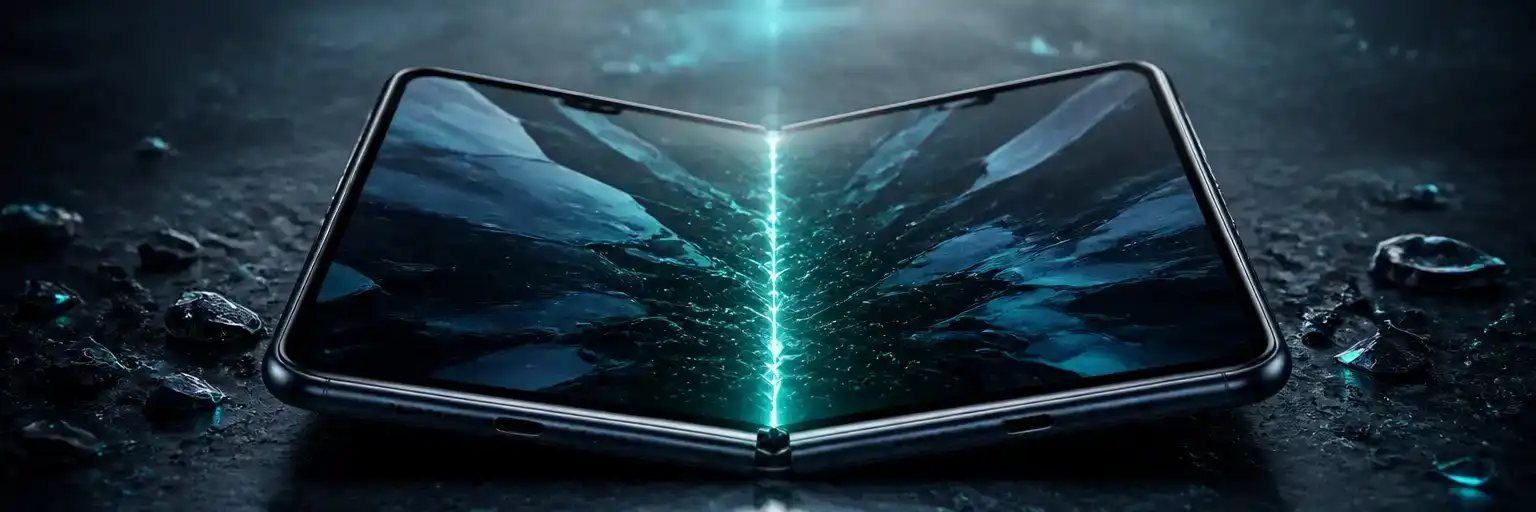
AI-generated image
In 2010, Steve Jobs reportedly branded the idea of a touchscreen on a laptop an ergonomic catastrophe, as Frandroid recalls. Sixteen years later, Apple has presented one. The interesting question isn't whether Apple changed its mind. It's what the change says about where the Mac is headed.
Apple presented the MacBook Pro with PROLED XDR display on October 28 in Los Angeles. It's the first Mac with a touchscreen, a tandem OLED panel, and the Dynamic Island replacing the notch. The Dynamic Island hosts Spotlight, Live Activities and Siri AI. Pre-orders are open, with first deliveries on November 6. The chips are still the M5 Pro and M5 Max from March, and the 14-inch M5 Pro weighs 1.38 kg, 220 grams less than its Mini LED sibling, according to Frandroid.
The Dynamic Island is the real message
The touchscreen is the headline, but the pill is the tell. Touch is designed to work alongside the keyboard and trackpad, not instead of them, and we'll take that at face value for now. Yet a pill you tap to pause a song or accept an AirDrop is pure iPhone behavior, now living on a desktop OS. Apple isn't merging macOS and iPadOS, at least not on paper. It's merging habits.
That isn't necessarily bad. Dropping a dead notch for something useful is an improvement, and creative apps with touch support (Final Cut Pro, Logic Pro) have a plausible case. But there's a catch: according to Frandroid, Spotlight only moves into the island if Siri AI is available and enabled. Siri AI is only in beta in macOS 27.2 and, per the same report, is still blocked in the European Union on iPhone, iPad and Apple Watch. A flagship feature that depends on another feature that isn't available everywhere is a shaky foundation.
We also think the "touch is optional" line is a little too convenient. Once the Mac has a touch screen and a pill designed for fingertips, developers will probably start designing for it. Numerama is already asking whether this foreshadows closer macOS and iPadOS apps, and that's the right question.
The OLED premium is where the argument falls apart
Now the money. According to Frandroid's price breakdown, with the same chip, memory and storage, the touch OLED model costs €400 more than the Mini LED in 14 inches and €500 more in 16 inches. The 14-inch starts at €3,299; the Mini LED stays on sale from €2,899.
What do you get for that money? A brighter panel (up to 2,000 nits in SDR against 1,000), a lighter body and touch. What you don't get: a new chip or longer claimed battery life, which Frandroid reports as identical to the Mini LED models. Frandroid notes that the €400 gap on the small model pays for the OLED touch screen and a lighter chassis, and we think that's a thin value proposition when the engine is unchanged.
Numerama points to the memory shortage and OLED costs as aggravating factors, and that's plausible. But explaining a price isn't the same as justifying it. Paying an extra €400 to €500 for a screen you may touch only occasionally, on a machine with the same chips and the same promised performance, looks to us like a tax on early adopters.
Who should buy it, and who should wait
Colorists and photographers who need Adobe RGB and the contrast of OLED have a real reason to consider it, as Digit points out. Musicians and editors who want to drag clips with a finger might too. Everyone else is paying for a first-generation redesign.
There are also unknowns. Apple hasn't shared fan counts or noise levels, it promises sustained M5 Max performance in a lighter chassis that only testing can confirm, and it added camera stabilization during touch, which suggests the panel may still wobble a bit. Frandroid also notes that battery claims were measured on pre-production units.
Our verdict: the direction is right, the execution looks promising, and the pricing is greedy. If you don't need OLED, the Mini LED model at €2,899 is the sensible buy. If you're tempted by touch, wait for independent reviews and for macOS to prove it can make the pill useful without Siri AI.
No topics yet: start the first one.
More stories
The iPhone Duo won't steal Samsung's fans. It will squeeze its prices
TrendForce sees Apple at 29.8% of foldables in 2027. We think the real story isn't defections from Samsung but a bigger market where Apple sets the price ceiling.
Apple's MIE jailbreak patch shows hardware security buys time, not immunity
A jailbreak got through Apple's flagship memory protection and most of its bugs were patched soon after. Hardware raises the cost of attacks, but updating fast is still your best defense.
The iOS 27.2 selfie check is fine. Putting the gate in the OS is the problem
Apple's new on-device age check sounds privacy-friendly, but a face scan built into iOS is a tool any lawmaker can point at. Apple should say where it stops.
Apple admits the iPhone Duo screen problem. Now it has to fix the policy
A replacement offer is a start, not an answer. Apple still owes buyers a promise that covers everyone, no blame on users, and a straight explanation of why the screens break.