Your Plex Server is a Target: Why Timely Updates Are Non-Negotiable
The rapid exploitation of Plex Media Server vulnerabilities, turning home networks into cryptomining and proxy hubs, underscores a critical and often overlooked truth: consumer software demands professional-grade vigilance.
Photo: Plex, Inc. / Wikimedia Commons (Public domain)
Do you still think your home media server is just for streaming movies? If you run Plex Media Server and haven't updated it recently, it might be doing a lot more than you bargained for — like mining cryptocurrency for hackers or routing illicit internet traffic through your residential IP address. The recent, rapid exploitation of a chain of vulnerabilities dubbed "Plex2Shell" serves as a stark reminder that even the most seemingly innocuous home applications can become significant attack vectors, turning personal entertainment hubs into unwilling participants in cybercrime.
Just days ago, on October 16, 2026, technical details and proof-of-concept (PoC) code for Plex2Shell were made public. This chain of four Plex Media Server vulnerabilities — tracked as CVE-2026-96652, CVE-2026-96654, CVE-2026-96655, and CVE-2026-96656 — allows attackers to execute arbitrary code on an exposed server without needing valid credentials, running with the same privileges as the Plex service itself. Within a day, on October 17, 2026, real-world exploitation was observed against internet-facing Plex servers, demonstrating just how quickly cybercriminals weaponize newly public exploits, as reported by SecurityWeek.
Patched, But Not Protected: The Consumer Security Gap
The most alarming aspect of the Plex2Shell attacks is not that vulnerabilities existed, but that they are being actively exploited months after fixes were available. Plex was notified of the bugs on July 27, 2026, and swiftly released patched versions (Plex Media Server 1.43.3.10861 and later) by early August 2026, following up with a public advisory on September 1, 2026. Yet, a significant population of internet-facing Plex Media Server installations remained on older, vulnerable builds, making them prime targets the moment the exploit became public. As shattered.io notes, this campaign is a potent reminder that "patched does not mean protected."
This gap between patch availability and user adoption highlights a fundamental difference between enterprise and consumer software management. While IT departments often enforce rigorous update policies, home users frequently set up a Plex server and then largely forget about ongoing maintenance. Plex's automatic update settings, where available (mostly Windows and macOS), often default to "Ask me" rather than auto-install. For installations on NAS devices, Linux, or Docker containers, manual updates or package manager intervention are typically required, adding friction that many users simply overlook. This lack of proactive updating leaves a wide-open door for attackers, turning personal media libraries into liabilities.
Beyond Cryptominers: The Insidious Threat of Your Home IP as a Proxy
The immediate consequence of these attacks is the deployment of cryptocurrency miners, specifically XMRig, which leverage the compromised server's computing power and electricity to generate revenue for the attackers. Users might notice their Plex server running slowly or unusually hot, as reported by Neowin. However, the threat extends far beyond performance degradation and increased electricity bills. Attackers are also installing proxy software, sometimes named "myawesomeproxy," which turns the victim's server into a residential proxy node.
This is where the true danger escalates. By routing their traffic through your home internet connection, attackers can mask their identity, appearing to originate from a legitimate residential IP address rather than suspicious infrastructure. This capability could be used for various illicit activities, from accessing corporate VPNs and emails to facilitating fraud, making the compromised Plex server an unwitting accomplice in more sophisticated cyber schemes. The implications are severe; as Ars Technica reminds us, a vulnerable third-party media software package was allegedly exploited in the 2023 LastPass hack, providing a "nightmare version" scenario of what a compromised home server can enable.
A Wake-Up Call for Home Media Ecosystems
Plex Media Server's widespread popularity, often running on devices continuously exposed to the internet, makes it an attractive target. The Plex2Shell chain itself illustrates a common modern attack pattern: combining several individually lower-severity vulnerabilities into a devastating path to unauthenticated remote code execution. Security teams focused solely on high CVSS scores might deprioritize such bugs, missing the critical outcome of their combined effect. This underlines the importance of comprehensive security, not just for businesses, but for home networks too.
It is imperative for every Plex Media Server owner to take immediate action. Verify that your server is running version 1.43.3.10861 or later. If not, update it without delay. Beyond just updating, users should adopt better digital hygiene: employ strong, unique passwords, consider restricting internet access to your Plex server if remote access isn't strictly necessary, or route external traffic through a reverse proxy. Your home media server is no longer just a digital entertainment console; it's a critical component of your personal digital footprint that demands consistent vigilance and robust security practices.
The Plex2Shell exploit is a powerful reminder that in the interconnected world, the security of our home networks is just as vital as that of our workplaces. We can no longer afford to treat consumer devices as secondary concerns; they are increasingly the gateways for attackers seeking a foothold into our digital lives.
No topics yet: start the first one.
More stories
Google Translate's Facelift: A Leap Forward or Just Keeping Up?
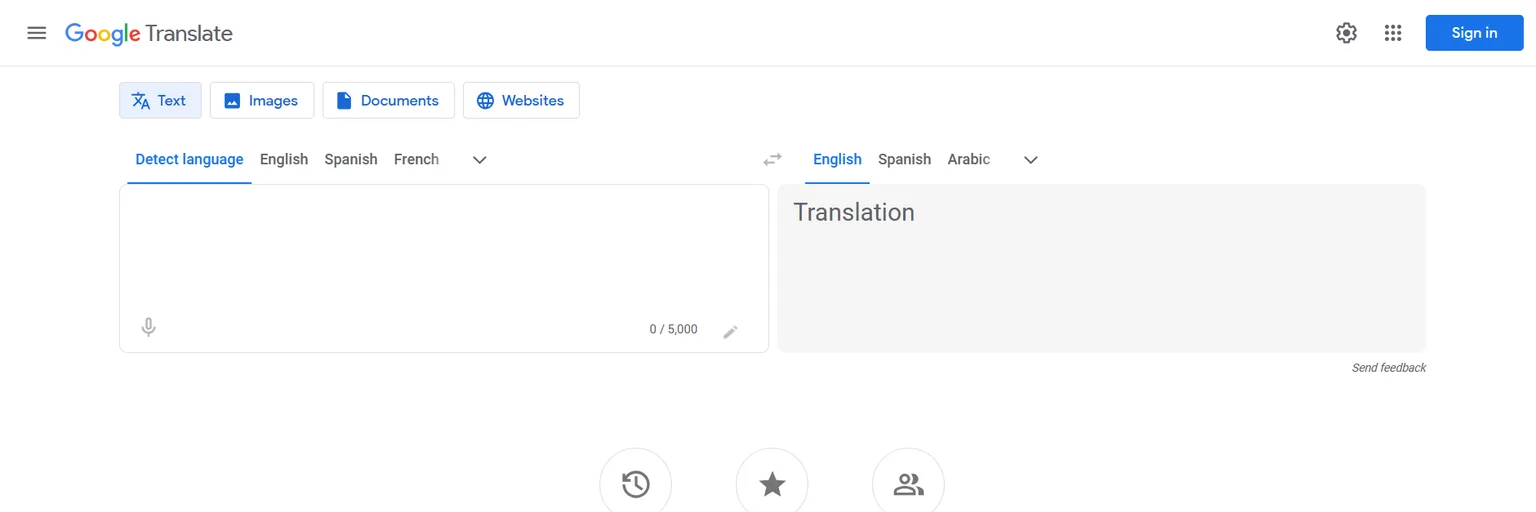
Google Translate's significant interface redesign for Android promises a more intuitive user experience, but it raises the question of whether this is a genuine step forward in usability or simply a much-needed modernization to keep pace with evolving design standards.
Character.AI's Downfall: A Wake-Up Call for User-Generated AI's Ethics
The bankruptcy and partial Disney acquisition of Character.AI, amidst lawsuits over teen suicides, starkly reveals the ethical tightrope user-generated AI platforms must walk.

Ford's Apple Maps Shift: Why Google Just Lost Ground in the EV Race
Ford's decision to integrate Apple Maps into its next-generation electric vehicles, moving away from Google for core navigation, marks a significant turning point in automotive infotainment and OEM reliance on big tech ecosystems.

Untapped Power: Unlocking Your Phone's Hidden Battery Life
Before reaching for a power bank, consider that significant battery life improvements are often found in overlooked smartphone settings, ready to extend your device's daily runtime.