DroidDeck: The Android App Reshaping Portable PC Gaming
DroidDeck is poised to transform how Android users approach PC gaming, offering a local, no-streaming experience that directly challenges the dominance of dedicated handheld devices like the Steam Deck.
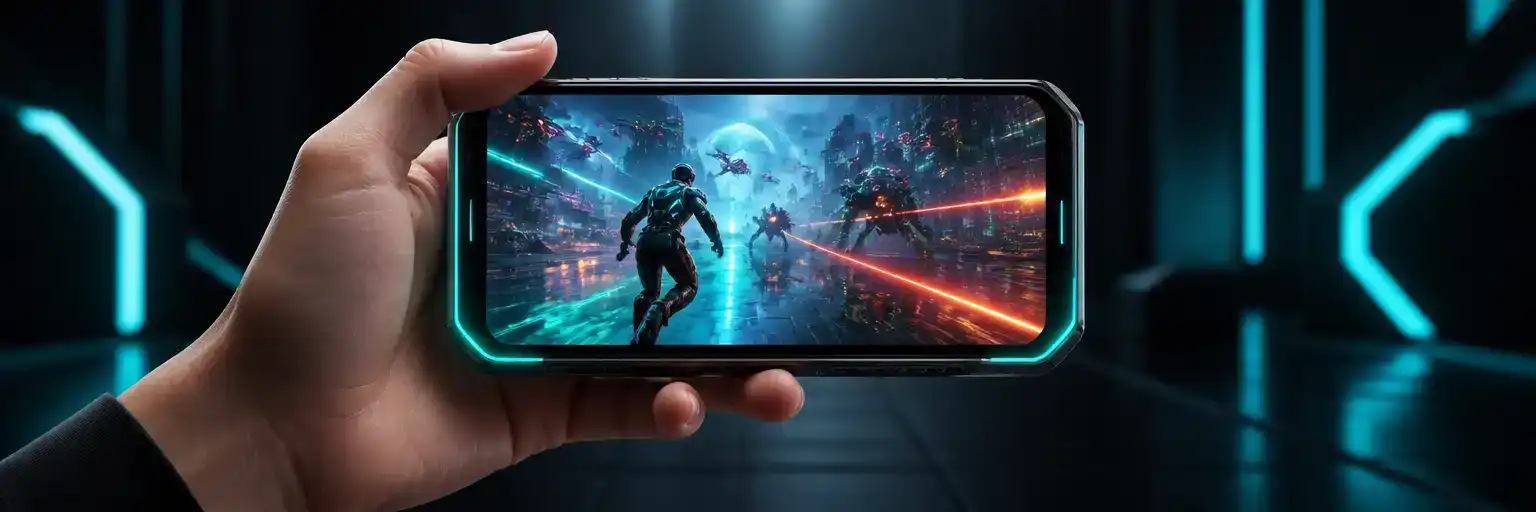
AI-generated image
For years, the dream of turning the smartphone in your pocket into a full-fledged PC gaming machine seemed perpetually out of reach. While cloud streaming services like GeForce NOW have offered a compelling glimpse into this future, they invariably tie the player to the whims of an internet connection. This fundamental dependency has limited true portability, but a new contender, DroidDeck, is now radically changing the equation by bringing local PC gaming directly to Android phones.
DroidDeck is not just another launcher; it’s an application that installs on Android devices and runs the ARM version of Steam in Big Picture mode. This means users can log in, access their Steam library, and download games directly to their phone, mimicking the experience of a dedicated handheld like the Steam Deck. Crucially, it achieves this feat by running Windows games through Proton, Valve’s compatibility layer, and employing a FEX translation layer to convert x86 code for ARM processors, making local play a tangible reality.
The Liberation of Local Play
The most significant disruption DroidDeck brings to the mobile gaming landscape is its commitment to local execution. The reliance on streaming, whether from your home PC via Moonlight or through cloud gaming providers, means a seamless experience is always at the mercy of network stability and bandwidth. DroidDeck, by contrast, frees players from these constraints, allowing them to enjoy their PC game library truly anywhere, without an active internet connection, much like a traditional handheld console (as Xataka reports).
This isn't merely about convenience; it's about control and ownership over the gaming experience. The app delivers Valve's own client interface, a distinct advantage over other local PC game runners such as GameNative or Winlator, which often rely on custom launchers. For Steam enthusiasts, this familiarity and integration into the Valve ecosystem is a major draw, providing an authentic SteamOS-like feel without having to alter the phone's native operating system.
Not for Every Pocket: The Hardware Imperative
While the promise of DroidDeck is alluring, it's essential to temper expectations with a dose of reality regarding hardware requirements. This isn't a solution for every Android phone currently on the market. To run PC games locally, DroidDeck demands significant processing power and a capable GPU. Specifically, it requires Android 9 or higher and a device equipped with an Adreno 730 GPU or superior, which effectively means Snapdragon 8 Gen 1 chips and newer are necessary (according to Xataka). If your phone has a Mali, Xclipse, PowerVR, or Adreno 710 GPU, DroidDeck isn't an option for you, at least for now.
Early tests by content creators like ETA PRIME, using a Redmagic 11 Pro with a Snapdragon 8 Elite Gen 5 chip and 16 GB of RAM, show games running at 720p. However, these demanding workloads can lead to rapid overheating, prompting recommendations to disable one or two CPU cores to maintain stable performance over time. This highlights that while DroidDeck works, it's still in its early stages and pushes current mobile hardware to its limits, requiring high-end gaming phones or flagship devices to even consider it.
Beyond Gaming: A Versatile Pocket PC
DroidDeck's ambitions stretch beyond merely playing games. The application also supports a desktop mode and allows for the installation of Linux applications via Flatpak and AppImage. This additional functionality transforms a powerful Android phone into a surprisingly versatile portable computer, capable of more than just entertainment. It blurs the lines between a gaming handheld and a pocket-sized productivity machine, mirroring some of the versatility found in Valve's own Steam Deck.
This broadens DroidDeck's appeal, suggesting that future iterations, as compatibility between games and ARM architecture matures, could see high-end smartphones truly evolve into multi-purpose portable consoles.
No topics yet: start the first one.
More stories
Porsche PCCM Plus: A Masterclass in Modernizing Classics Without Compromise
Porsche's latest PCCM Plus expansion offers wireless Apple CarPlay and Android Auto to a new wave of youngtimer models, proving that modern connectivity can enhance, not detract from, the classic driving experience.
Hirudo: The Android Trojan Redefining Mobile Banking Threats
A new generation of Android banking malware, Hirudo, moves beyond simple credential theft by replacing legitimate apps with trojanized versions, forcing users to rethink mobile security.

OPPO's Find X10 Series: A Bold Challenge to Flagship Photography Giants
With its "true-to-life" imaging, triple 200MP cameras, and advanced AI, the OPPO Find X10 Series is directly confronting the photography dominance of Google Pixel and Samsung Galaxy, aiming to redefine realism in smartphone photography.
Honor's Win-2 Series: More Than Just a Power Play, It's a Statement
Honor's new Win-2 series, with its dedicated WIN-key and colossal batteries, challenges mobile gaming flagships to deliver specialized experiences that go far beyond raw processing power.