Samsung's Galaxy S27 Leaks Hint at Smart Refinement, Not Revolution
Early leaks for the Samsung Galaxy S27 series, including memory, storage, battery, and software focus, suggest a strategic move towards perfecting the core experience rather than chasing radical new features in a maturing market.
Photo: Ruslan Lytvyn / Shutterstock.com
The smartphone market is arguably entering a new era, one defined less by groundbreaking innovations and more by meticulous refinement. This sentiment appears to be perfectly captured by the early leaks surrounding Samsung’s upcoming Galaxy S27 series. Rather than hinting at a radical overhaul, the whispers from industry insiders and regulatory filings suggest Samsung is prioritizing significant improvements to core user experience, from battery life to software stability, potentially acknowledging a market that values polish over untested novelty.
Set for an anticipated launch in early 2027, likely between January and February, the Galaxy S27 line is already generating considerable buzz. However, much of that discussion centers on practical enhancements and crucial fixes, rather than revolutionary new features. From an expanded battery capacity in the Ultra model to a concerted effort on software optimization, Samsung seems to be addressing long-standing user demands and market trends. These changes, while not always flashy, could redefine what users expect from a premium Android flagship.
The Rising Cost of Premium Power
One unavoidable detail emerging from the leaks is the expected price hike across the Galaxy S27 series. Reports from Korea indicate that escalating costs for DRAM and LPDDR6 memory components will force Samsung to increase prices, with the base model potentially seeing an increase of at least 85 euros as reported by Geeknetic. This trend is not unique to Samsung, reflecting a broader inflationary pressure across the high-end smartphone segment, partly driven by the immense demand for semiconductors to fuel AI data centers. We could even see 1 TB variants approaching 2,000 euros, a figure that continues to push the boundaries of what consumers are willing to pay for a smartphone. This signals a future where top-tier mobile technology becomes an even more exclusive commodity, influenced heavily by global supply chain dynamics and the insatiable appetite of AI.
Battery Life: A Silent Revolution in Capacity
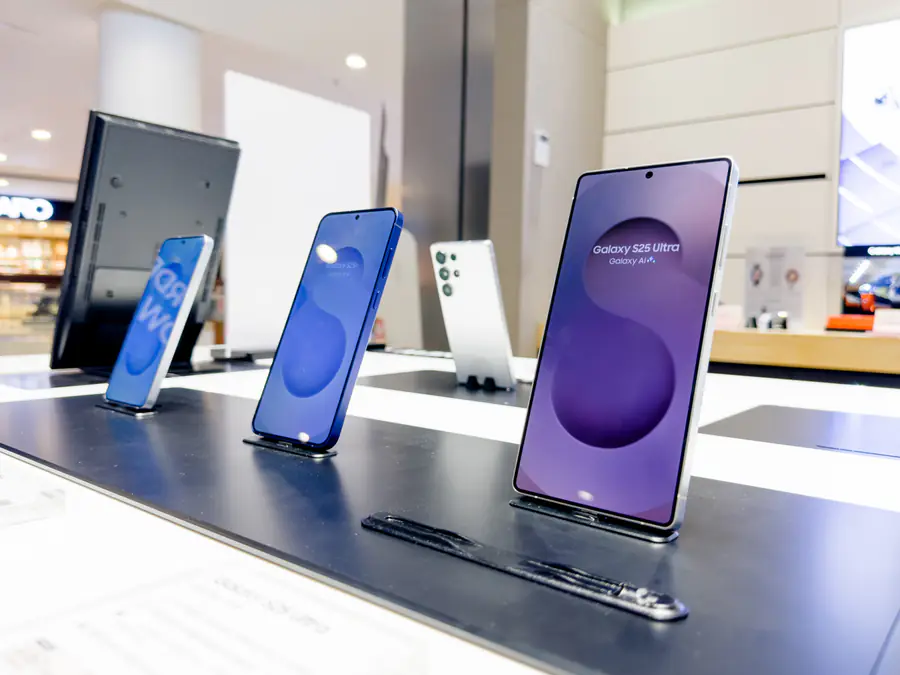
Perhaps one of the most significant and welcome upgrades appears in the Galaxy S27 Ultra's battery. Leaked regulatory filings in China reveal a substantial increase, with the S27 Ultra expected to feature a typical capacity of 5,700 mAh, up from the S26 Ultra’s 5,000 mAh. This roughly 14% boost is coupled with 60W wired fast charging for both the Ultra and the new S27 Pro models, as indicated by sources like MDZ Online. This improvement is reportedly achieved through silicon-carbon technology, allowing for greater charge density without increasing the phone's physical thickness. In our view, this focus on raw endurance is a smart play. In a world of ever more powerful processors like the rumored Snapdragon 8 Elite Extreme Gen 6, a larger battery is not just an upgrade; it's a necessity that directly impacts daily usability and user satisfaction. It also suggests Samsung is listening to users who prioritize all-day power over other, less critical, advancements.
Software Maturity Takes Center Stage
Beyond hardware, Samsung is reportedly making a concerted effort to deliver a more polished software experience from day one. According to leaker Ice Universe, as reported by Notebookcheck.org, development and software testing for the S27 series began much earlier this year. The goal is a
No topics yet: start the first one.
More stories
Samsung's SmartTag3: A Cunning Gambit or a Conflicted Strategy?
Samsung's latest SmartTag3 supports iPhones but largely ignores other Android users, a strategic paradox aimed at challenging Apple while fortifying its own ecosystem.

RAM Crisis and AI: The End of Affordable Mid-Range Android?
Rising RAM costs, exacerbated by AI demands, are forcing general smartphone price increases, fundamentally challenging the value proposition of mid-range Android devices and making essential technology less accessible for many.