Samsung Wallet's USDC Move: A Quiet Revolution in Global Payments
By embedding USDC transfers directly into 82 million US Galaxy phones, Samsung isn't just adopting stablecoins; it's poised to fundamentally alter cross-border transactions and pressure the entire mobile payment ecosystem.
AI-generated image
Is Samsung truly ready to shake up the global payments scene, or is its latest move merely a niche play in the ever-evolving world of digital finance? The company's recent announcement to integrate USD Coin (USDC) transfers directly into Samsung Wallet is far more significant than a simple nod to cryptocurrency; it represents a calculated maneuver that could redefine how money moves across borders and, ultimately, challenge the established order of mobile payment platforms.
From the last week of October 2026, eligible Samsung Galaxy users in the United States will gain the unprecedented ability to send and receive USDC directly from their pre-installed Samsung Wallet, with settlements occurring over the high-speed Solana network. This isn't about navigating complex crypto exchanges; it's about seamless transfers, allowing funds to be sent internationally to compatible crypto wallets or even to bank accounts, effectively bypassing many traditional financial intermediaries. The rollout targets a substantial user base: 82 million devices in the U.S. alone, enabling cross-border transfers to compatible crypto wallets internationally. While some reports suggest over 60 supported destinations, this specific figure has not been officially confirmed by the Solana Foundation or Samsung Electronics, as noted by CryptoTicker.
Ending Crypto's Complication Barrier
For years, the promise of stablecoins — digital tokens pegged to fiat currencies like the U.S. dollar, issued by companies such as Circle — has been hindered by the inherent complexity of the cryptocurrency ecosystem. Opening exchange accounts, managing seed phrases, and navigating unfamiliar interfaces have proven to be significant barriers to mass adoption. Samsung's integration into its native wallet, however, largely removes these hurdles. As OneSafe highlights, this isn't a buried crypto-exchange app; it's a feature within the same Samsung Wallet users already utilize for loyalty cards and everyday transactions. By making USDC as accessible as sending a text, Samsung is effectively shifting stablecoin usage from niche trading towards mass-market payment, a crucial step that has been missing for stablecoins to reach their full potential beyond institutional use.
This direct integration into a familiar mobile environment means that millions of everyday users, who may have little to no prior exposure to blockchain, can now access digital dollars. This dramatically expands the addressable market for stablecoin payments, setting the stage for a new wave of adoption that transcends the crypto-native community. We believe this move is a powerful statement about Samsung's vision: to normalize and embed digital asset utility within the mobile experience, a strategy that could force competitors to re-evaluate their own positions in the evolving digital finance landscape.
Reshaping Cross-Border Payments, One Fraction of a Cent at a Time
The most immediate and profound impact of Samsung's USDC integration will likely be felt in the realm of cross-border payments and remittances. Traditional international wire transfers, often reliant on a chain of correspondent banks via SWIFT, are notorious for being slow and expensive. They can take anywhere from two to five business days and typically incur fees ranging from $25 to $50, plus potential foreign exchange markups, as detailed by OneSafe.
In stark contrast, USDC transfers over the Solana network boast near-instantaneous finality — settling in seconds, not days — with transaction fees measured in fractions of a cent. For businesses and individuals regularly moving money across borders, these savings can compound rapidly, offering a compelling alternative to conventional rails. While Samsung has not yet published its own fees, the underlying technology promises significant cost and speed advantages. This positions Samsung Wallet to directly compete with, and potentially disrupt, the established remittance corridors, particularly benefiting users in emerging markets where costly FX spreads and slow systems have long been a challenge. The integration could unlock real-time, low-cost value transfer, fulfilling a long-held promise of stablecoins.
The Unseen Challenge to Google Pay and Apple Pay?
While Samsung's move doesn't immediately put it in direct competition with Google Pay or Apple Pay for everyday in-store tap-to-pay transactions—its Samsung Pay feature already handles that—it certainly pressures the broader mobile payments ecosystem. By establishing a robust, user-friendly rail for international digital dollar transfers, Samsung is carving out a powerful new category within mobile finance. It's expanding the definition of what a mobile wallet can do, moving beyond simple card digitization to direct, blockchain-powered value transfer.
This development puts other major mobile wallet providers on notice. If a significant portion of the 82 million eligible Galaxy users in the U.S. adopt USDC transfers, it could establish a new benchmark for mobile wallet utility. As industry analysts suggest, where one major OEM moves, others typically follow. We expect this to pressure Google and Apple to consider similar integrations, potentially extending the reach of native mobile stablecoins to over two billion devices globally. The hardware layer for this shift appears ready; it's the removal of regulatory and user-experience 'trapdoors' that could trigger a flood of wider usage and reshape the competitive landscape for mobile payments providers worldwide.
No topics yet: start the first one.
More stories
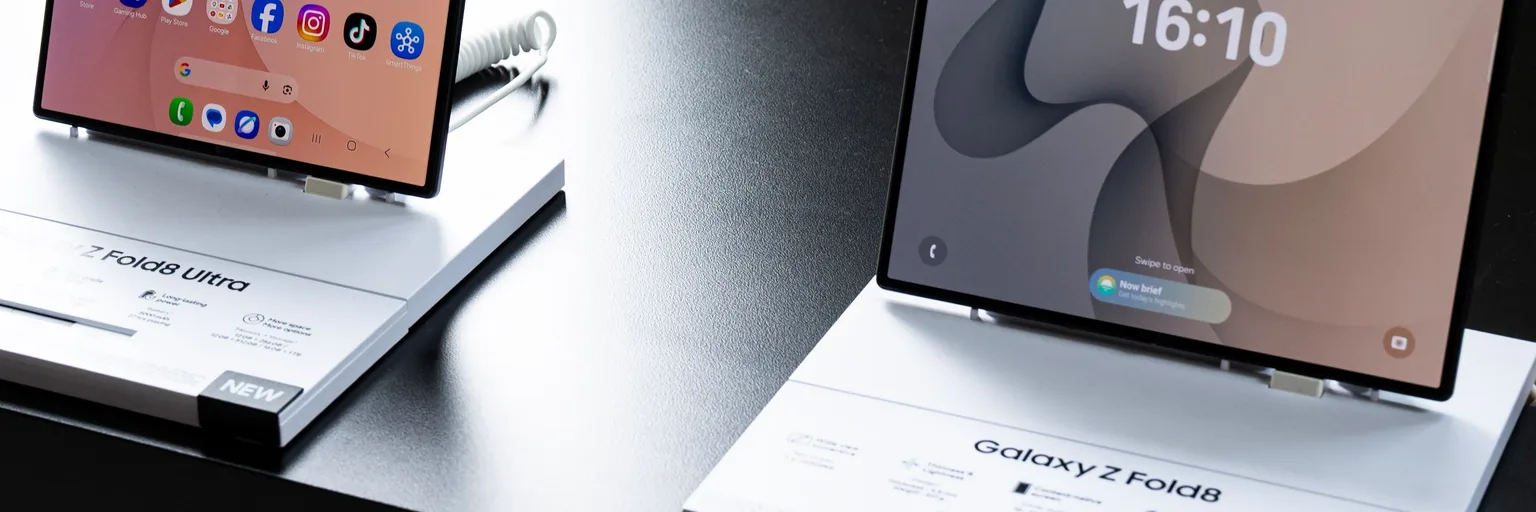
Samsung's Foldable Blitz: Is the Galaxy Z Fold 8 the Tipping Point?
With the Galaxy Z Fold 8 lineup's July debut and aggressive promotions, Samsung is making a clear statement: foldables are here to stay, and the company intends to lead the charge, broadening their appeal beyond early adopters.
Samsung's Mid-Range Update Strategy: Planned Obsolescence or Practical Support?
Samsung has ended software support for the Galaxy A04s and A23 5G, pushing users toward an upgrade cycle that raises concerns about device longevity and the environmental impact of budget-friendly smartphones.

Samsung's Galaxy S27 Leaks Hint at Smart Refinement, Not Revolution
Early leaks for the Samsung Galaxy S27 series, including memory, storage, battery, and software focus, suggest a strategic move towards perfecting the core experience rather than chasing radical new features in a maturing market.
Samsung's SmartTag3: A Cunning Gambit or a Conflicted Strategy?
Samsung's latest SmartTag3 supports iPhones but largely ignores other Android users, a strategic paradox aimed at challenging Apple while fortifying its own ecosystem.