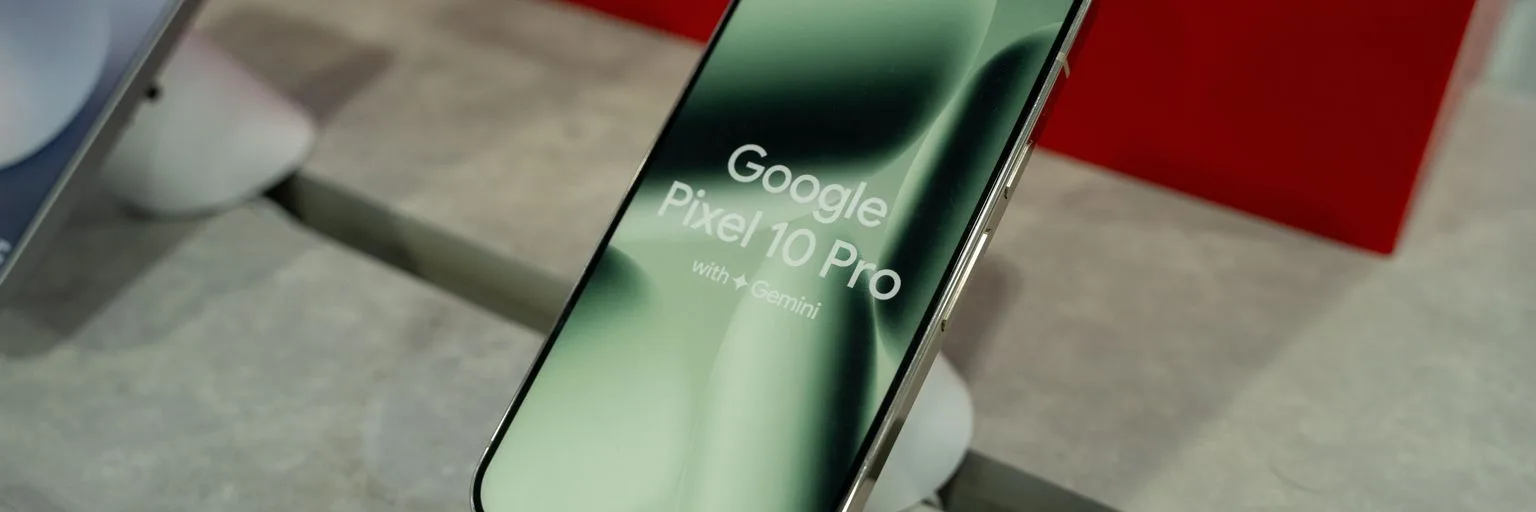
Pixel Tag is a fine tracker, but Find Hub decides if it wins
Google's $29.99 Pixel Tag finally gives Android a first-party answer to AirTag, but the hardware is the easy part: the Find Hub network and its safety net are the real product.
AI-generated image
Would you buy a tracker for its button, or for the strangers' phones that will quietly help you find your keys? If your answer is the second, then the Pixel Tag is a more interesting product than its spec sheet suggests, and also a riskier one.
The facts are simple. Google's Pixel Tag went on sale this week at $29.99 for one or $99.99 for a four-pack, as The Verge reports. It uses ultra-wideband and Bluetooth 6.0 Channel Sounding for close-range finding, a replaceable CR2032 battery rated for over a year, and IP67 protection. It works with phones running Android 9 or later, though the precise features need a UWB chip or Bluetooth 6.0 support.
The hardware is good enough, and that is the point
Nothing here is revolutionary, and it shouldn't be. The tag is thinner than an AirTag, has a button that rings your phone (the AirTag has no equivalent, according to Digital Trends), and lets you share its location with up to 10 people. That button is a smart touch. Losing the phone is probably about as common as losing the keys, and it's a small, honest bit of design.
But the competition is not asleep. Digital Trends notes that Samsung's SmartTag 3 costs $29.99 and claims up to 550 days of battery, and that Motorola's Moto Tag 2 also uses Find Hub at a similar price. The hardware advantage, then, is thin. In our view, "first-party" matters less for the tag itself than for what it signals: Google is putting its name behind Find Hub as a platform.
A tracker is only as good as the crowd around it
When your bag is three blocks away, none of the clever radios matter. What matters is whether some stranger's Android phone passes close enough to whisper your tag's location back. Google says Find Hub spans more than a billion Android devices, according to TechCrunch. That is a big number, and we think it is the strongest argument for buying one.
Still, a headline count says nothing about density where you live. A billion devices spread across the planet may mean a lot in a downtown core and very little on a rural road. We have no documentation comparing coverage against Apple's network, so we won't pretend to know who wins. What we can say is that a product like this lives or dies on real-world recovery, and that is the test to watch as independent reviews pile up.
Anti-stalking protections are the quiet make-or-break
Every tracker is also a stalking tool in waiting. Android Police notes that Find Hub alerts users when an unfamiliar Bluetooth tracker seems to be following them, a safety feature Google and Apple standardized together. That is reassuring, and it means the Pixel Tag doesn't start from zero.
But the more popular a tag gets, the more it will be tested by bad actors. Some details we saw on the tag's safeguards came from leak-based reporting, so we'd treat the full picture as something Google still has to demonstrate. One neat addition: the tag has NFC, but Google uses the tap to open the tag's settings rather than show the owner's contact info. A finder instead gets contact details through "Lost" mode. It is a sensible compromise, though a less familiar one than Apple's.
Our verdict
If you live in a Pixel or broader Android household and want a tracker that plugs into Find Hub, the Pixel Tag is an easy yes at $29.99. If battery life matters most, Samsung's SmartTag 3 deserves a look, and iPhone owners are better served by the AirTag. It is late, yes, but late is fine when the network is already there. What Google must prove now is not the tag. It is that Find Hub is dense enough to find your stuff and careful enough to protect everyone else.
No topics yet: start the first one.
More stories
When the Pixel 11 viewfinder lies, Google owes you more than silence
A bug that drops moving subjects from saved video is worse than a crash, because you only find out once the moment is gone. Google should own it, and fast.

Pixel's True Test: When Stability Outshines New Features
Google's swift Android 17 QPR2 Beta 7.1 release for Pixel devices, targeting crucial performance and stability issues, underscores a proactive approach essential for user retention and brand trust.
The Pixel 11 Pro's Real Rival Isn't the iPhone, It's the Pixel 11
Google's Pixel 11 Pro offers advanced cameras and AI, but its premium price struggles to justify itself when the standard Pixel 11 delivers comparable everyday performance and features for less.

The Pixel 10a's $100 Hike: Is the Mid-Range Smartphone Dying?
Google's unannounced price increase for the Pixel 10a reflects a worrying industry trend, threatening to erode the value proposition of once-affordable devices and push consumers towards difficult choices.