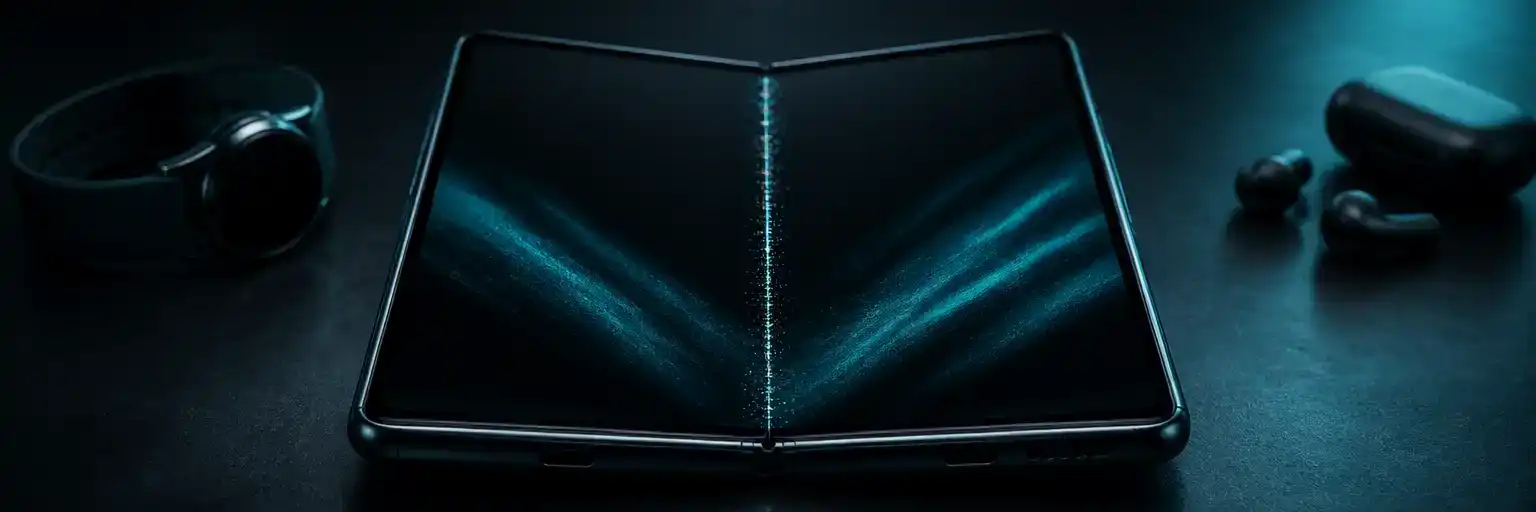
The iPhone Duo's hinge isn't the flaw. Apple's silence is
A reported 30% return rate and a hinge showing wear after 400,000 folds mark the Duo as a first-gen product. Apple should publish durability data, not just swap units.
AI-generated image
Is a $2,000 phone still a success if three in ten buyers in a survey send it back? Apple's first foldable is selling, but the story three weeks in has moved from "wow" to "hmm," and it centers on the hinge.
Here is what we know. According to The Tab's account of a 9to5Mac poll, 30 percent of the 6,000 people surveyed returned their Duo during Apple's 14-day return window. Separately, CNET's livestreamed fold machine has pushed the phone past 451,000 folds. MacRumors reports the hinge is showing signs of wear, though the phone still works.
A 30% return rate is a warning, not a verdict
Be careful with that number. It comes from a poll, not from Apple, and people who answer a survey about their Duo probably aren't a random sample. We wouldn't read it as "30% of all Duos come back."
Still, the reasons cited are telling, and mostly not about the hinge. The Tab lists the missing Face ID (Touch ID sits on the side button), apps that aren't optimized for the big screen, and a charging port placed on the half that opens. Then there's "Crackgate." Apple has said the screen cracks affect a "small number" of units and is issuing replacements.
Our read: many returns are probably expectation problems. People paid $2,000 for an iPhone and got a first-generation foldable with trade-offs. That is a product-positioning failure as much as an engineering one.
The hinge test is better news than the headlines suggest
The headlines say "starting to fail." The details say something else. AppleInsider, citing CNET, notes that at 100 folds a day, 440,300 folds equals about 12 years of use. In our view, that is far beyond how long most people keep a phone. CNET observed measurable changes in the hinge's opening force and motion, but the phone is still operational.
So the hinge, in our view, is not the scandal. A machine folding at roughly 900 cycles an hour is also not a pocket. The risk for real owners is more mundane: cracks along the fold, drops, and the crease deepening over time, as Android Authority's coverage of fold testing suggests.
Apple should publish the numbers
Here is the real gap. One third-party case maker's blog notes that Apple gives no fold rating. That leaves outsiders such as CNET, drop testers and case makers to build the picture. Every independent test is partial, and every partial test turns into a scary headline.
Replacing cracked units is good customer service, but it isn't transparency. If Apple believes the hinge is good for a decade of folding, it should say so with a methodology: cycles tested, conditions, failure criteria, and what the warranty covers when the crease or panel fails. Publishing that would do three things. It would answer the return-rate anxiety, give buyers a concrete basis for a $2,000 decision, and put pressure on rivals to do the same.
Apple has built its reputation on controlling the story. With a foldable, the story is already being written by a fold-testing machine on a livestream.
Who should buy, and who should wait
If you love the idea of a pocketable 5.4-inch phone that opens to 7.6 inches, and you can live without Face ID and with apps that will take time to catch up, the Duo looks like a reasonable early-adopter bet. A long-time iPhone user writing at BGR, for one, says he has no intention of returning his, even with his list of quirks.
If you want an iPhone that simply works like every iPhone before it, wait. A second generation will probably fix the obvious complaints, and by then we hope Apple will have published the durability data it should be giving buyers now. Until then, the 14-day return window is the most useful feature on the box. Use it.
No topics yet: start the first one.
More stories
450,000 folds sounds great, but the iPhone Duo's hinge test isn't the proof it seems
CNET's machine says the iPhone Duo's hinge suffers but doesn't break. Fine, but dust, creases and cracked screens are the real questions, and Apple should publish its own numbers.
iPhone 18 Pro Max won the battery test, but don't buy it for that
CNET's 32-phone shootout crowned Apple again, yet its method says more about software tuning than about how your own day will go.
Apple's hidden keyboard blacklist should be public, and editable by you
A secret list of words your iPhone won't suggest or swipe is editorial power in disguise. Apple should publish it and let you override it.
Crackgate isn't about cracks: it may be about Apple rushing its first foldable
A Foxconn worker says Apple eased inspections on the iPhone Duo before the holidays. Unproven, but it fits the evidence, and it's reason enough to wait before paying 2,339 euros.