iPhone Duo's battery isn't the story: its software still has to catch up
A 4,883mAh battery is respectable, not remarkable. What will decide whether the $1,999 foldable is worth it is how fast apps learn to use all that extra screen.
AI-generated image
Is a $1,999 phone really finished if many of your apps haven't yet learned to use its giant screen? That's the uncomfortable question hanging over the iPhone Duo, which reached stores on October 23. The hardware is the part Apple has clearly sweated over. The software is the part we're still waiting on.
Here's the short version. According to Apple's European product information, as The Apple Post reports, the battery is 4,883mAh in a dual-battery system, and Apple rates the phone for up to 31 hours of video playback on the inner display and up to 44 on the outer one. Those are the numbers everyone is quoting. We think they are the least interesting part of the story.
The battery is fine, and "fine" is the point
Let's not overdo it. By Apple's standards, 4,883mAh is a lot. Mashable notes it beats every iPhone since the iPhone 13 except the eSIM-only iPhone 17 Pro Max and both iPhone 18 Pro Max versions. MacDailyNews adds that it sits between the eSIM-only iPhone 18 Pro and Pro Max. Fitting that into a thin device with a hinge and two displays is, in our view, a real engineering feat.
But a foldable is the one phone where capacity can't tell the whole story. The inner screen is a 7.6-inch panel, and Apple's own numbers show the cost: 31 hours of video versus 44 on the small screen. That gap is the real battery story. If you live on the big display, as the whole premise of the phone suggests you will, you'll be living on the lower number. We'd call the battery a solid, unspectacular B, and that's acceptable. It stops being acceptable only if the software wastes it.
A big canvas is only useful if apps fill it
This is where the thesis bites. Apple has done smart things with the shape: both displays share the same aspect ratio, and the company says iOS 27 adapts to the different ways of holding the phone. Creative Strategies, in a generally glowing review, describes controls moving to the sides so that the viewable content stays roughly identical to an iPhone 18 Pro, with more content or about the same depending on the app, and very rarely less.
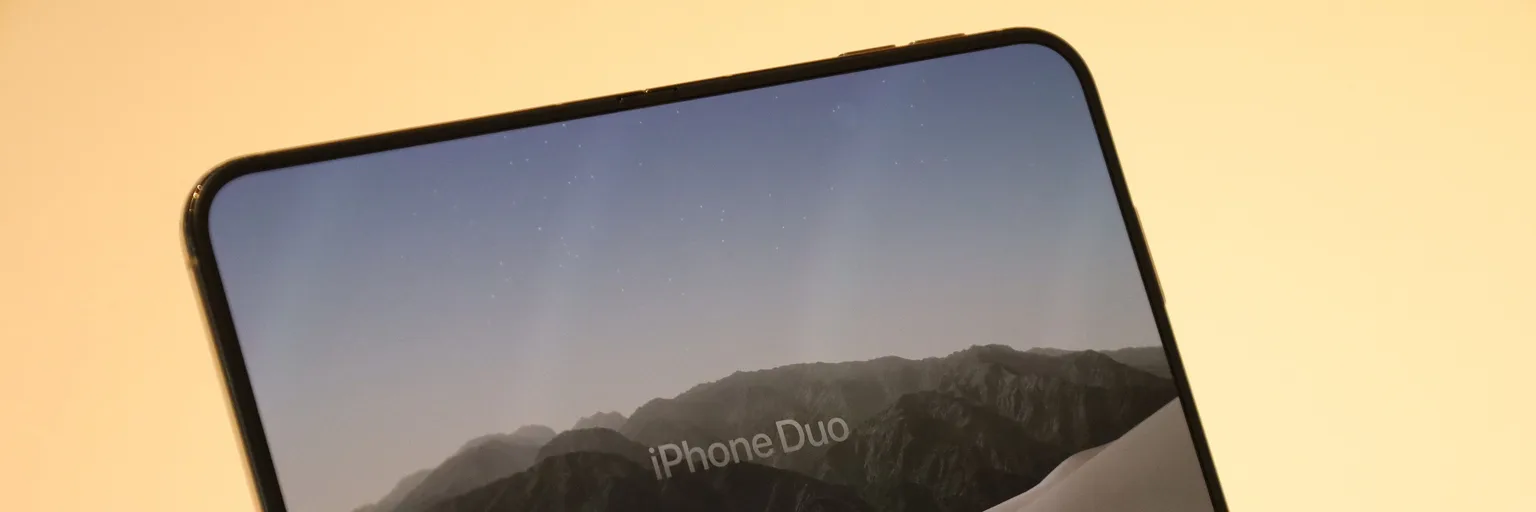
Fair enough, and clever. But "roughly the same as a regular iPhone" is a strange compliment for a phone whose inner display, Apple says, is 50 percent larger than the iPhone 18 Pro Max's. In our opinion, a foldable earns its price when the extra space changes what you can do, not when it merely avoids breaking things. That depends less on Apple's engineers than on every developer whose app you open each day.
Apps are catching up, but the first weeks are the risky ones
To be fair, there's a credible optimistic story. The same Creative Strategies review says that over its roughly six days with the phone, apps went from largely unoptimized (Perplexity and Claude being the exceptions) to nearly half updated, and that most should be ready by Friday's customer pickup. It also says apps built on Apple's native SwiftUI tend to need little work beyond updating to Xcode 27.1. We buy that this will improve quickly. Apple has done this dance before, and developers have good reasons to show up for a premium device.
Still, the same reviewer concedes that reviewers' experiences probably weren't that great. "It'll be fine in a few weeks" is a different pitch from the one in Apple's launch announcement, where John Ternus said the Duo shows what's possible "when hardware and software are engineered together." For a phone that costs $1,999, we think the gap between those two sentences is exactly where early buyers should be skeptical.
Our verdict
If you're buying the iPhone Duo, buy it for the hardware: the pocketable closed form, the big matte-finish screen, a battery that is competitive without being heroic. Don't buy it expecting every app you use to take advantage of that canvas on day one. If you spend most of your time in third-party apps that haven't been updated yet, waiting a few weeks or months for the ecosystem to mature is a perfectly rational move.
For Apple, the lesson is plain. A foldable's value isn't in the fold but in what the software does with the space. Hardware got the Duo through the door. Now the software has to prove the $1,999 was spent on more than a bigger rectangle.
No topics yet: start the first one.
More stories
The iPhone Duo jailbreak shows novelty is no longer a shield
A launch-day jailbreak, helped by AI, suggests Apple can't count on fresh hardware to buy time. Buyers should judge it by how fast patches arrive, not by perfection.
iPhone Duo's cracked creases are the real launch test, not the reviews
Scarce stock hides the first crease failures on Apple's $1,999 foldable. Before anyone pays that premium, Apple owes buyers plain answers on warranty and repairs.
Apple's walled garden is cracking country by country, and fighting each one is a losing game
Australia's Federal Court has ordered rival app stores and alternative payments on the iPhone. Apple's best move is a single global model, not another appeal.

A sold-out iPhone Duo proves scarcity, not quality: the tests are the story
Apple's two-per-customer cap and January ship dates grab headlines, but early stress tests show a sturdy hinge and a display worth worrying about before you spend $1,999.