Apple Watch on Android: A Crack in the Walled Garden, But For Whom?
An ambitious open-source project allows Apple Watch pairing with Android phones without an iPhone, challenging Apple's ecosystem lock-in, yet its practical appeal remains limited to a niche.
Photo: Mliu92 / Wikimedia Commons (CC BY-SA 3.0)
For years, the incompatibility between Apple Watch and Android phones has been a cornerstone of Apple's tightly integrated ecosystem. Android users often lament this restriction, finding the Apple Watch to be an enticing, yet inaccessible, piece of tech. While various workarounds and even limited official support from some Android manufacturers have tried to bridge the gap, they almost universally required an iPhone for the initial setup. Now, an open-source project called Apple Watch Companion has emerged, promising to fundamentally alter this dynamic.
This groundbreaking initiative has reportedly achieved the once-thought-impossible: pairing and activating an Apple Watch with an Android phone without any prior iPhone involvement. It’s a development that immediately captured attention, sparking discussions about user freedom and the future of cross-platform wearables. However, as with many ambitious technical feats, the reality for everyday users is more nuanced than the headlines suggest, and Apple's own stance remains notably ambiguous.
The Walled Garden Faces a Direct Challenge
Apple has long maintained that its Watch is an iPhone accessory, built to communicate primarily with a paired iPhone over Bluetooth and Wi-Fi. The company even previously asserted to the Department of Justice, during an antitrust case, that Android support "wasn't doable because of technical limitations," without explaining why, and that Apple said it had investigated the possibility for three years, as Android Police reports. This stance highlights a deliberate ecosystem strategy, creating a compelling reason for iPhone ownership if one desires an Apple Watch.
Prior to this new open-source project, attempts to use an Apple Watch with Android typically fell into two categories: limited official solutions or unofficial workarounds. Chinese manufacturers like Huawei, Vivo, and Xiaomi have built their own apps to offer some level of Apple Watch support on their Android phones, though Notebookcheck reports these still require an iPhone for the initial setup. Similarly, apps like Merge Watch promised to sync notifications and fitness data, but also needed the Watch to be first activated with an iPhone, as Tbreak UAE notes.
Another known workaround involved cellular-only Apple Watch models. Here, the Watch could operate somewhat independently via its own cellular connection, but still needed an iPhone for its initial activation and setup. Users would often transfer their SIM or eSIM from an iPhone to an Android device after the Watch was provisioned. This method, described by Android Authority and Pocket-lint, allowed the Watch to use basic functions without a nearby iPhone, but it was far from a true pairing experience and led to inconsistent results regarding messaging and feature loss. Crucially, the Apple Watch Companion project distinguishes itself by entirely removing the iPhone from the activation process, marking a significant technical achievement.
A Triumphant Proof of Concept, Not Yet a Daily Driver
The Apple Watch Companion, hosted on GitHub, gained wider attention through a post on X, describing it as AI-assisted reverse engineering. This project can, according to Tbreak UAE, pair and activate an Apple Watch on an Android phone without any iPhone involvement. Initial reports from Android Authority confirm that basic management, interface control, checking battery information, managing watch faces, and changing certain settings already work.
However, the requirements are steep, and its current state is best described as a proof of concept for tinkerers. It needs a rooted Android phone running Magisk and has only been verified on a specific combination: a OnePlus 13 paired with an Apple Watch Ultra 2 running watchOS 26.2. This means users with other Android phones or Apple Watch models are venturing into untested territory. More importantly, key functionalities like calling and health data integration — often core reasons to own a smartwatch — are still missing or incomplete, as Tbreak UAE reports. This limits its practical appeal for most users seeking a fully functional smartwatch experience.
Apple's Ambiguous Signals and the Road Ahead
Adding another layer of intrigue is Apple's own recent, albeit vague, statement. Its support page for cellular setup now includes an unexpected line: "You can now pair an Apple Watch with Android, but there's a big catch," as noted by Gadget Hacks. This official hint stands in stark contrast to previous denials of Android support made to the Department of Justice.
However, Apple has not published any further details regarding eligible models, carriers, regions, or setup steps. This suggests that the "big catch" likely refers to a highly specific, cellular-dependent scenario rather than broad Bluetooth companion app support, and crucially, an iPhone is still required to activate the Watch in the first place, according to Apple's broader documentation. The new wording on Apple's site doesn't seem to modify the long-standing requirement for an iPhone for initial setup and full functionality. This makes the open-source project even more significant, as it addresses a core limitation that Apple itself has not yet officially overcome.
For now, the Apple Watch Companion is an impressive technical achievement that broadens the conversation around cross-platform compatibility. It demonstrates that the technical barriers Apple cited to the DOJ may not be as insurmountable as once presented. While it's not yet a plug-and-play solution for the average consumer, it represents a significant crack in Apple's tightly integrated ecosystem, potentially paving the way for more accessible cross-platform use in the future, if either the open-source community or Apple decides to truly embrace it.
No topics yet: start the first one.
More stories
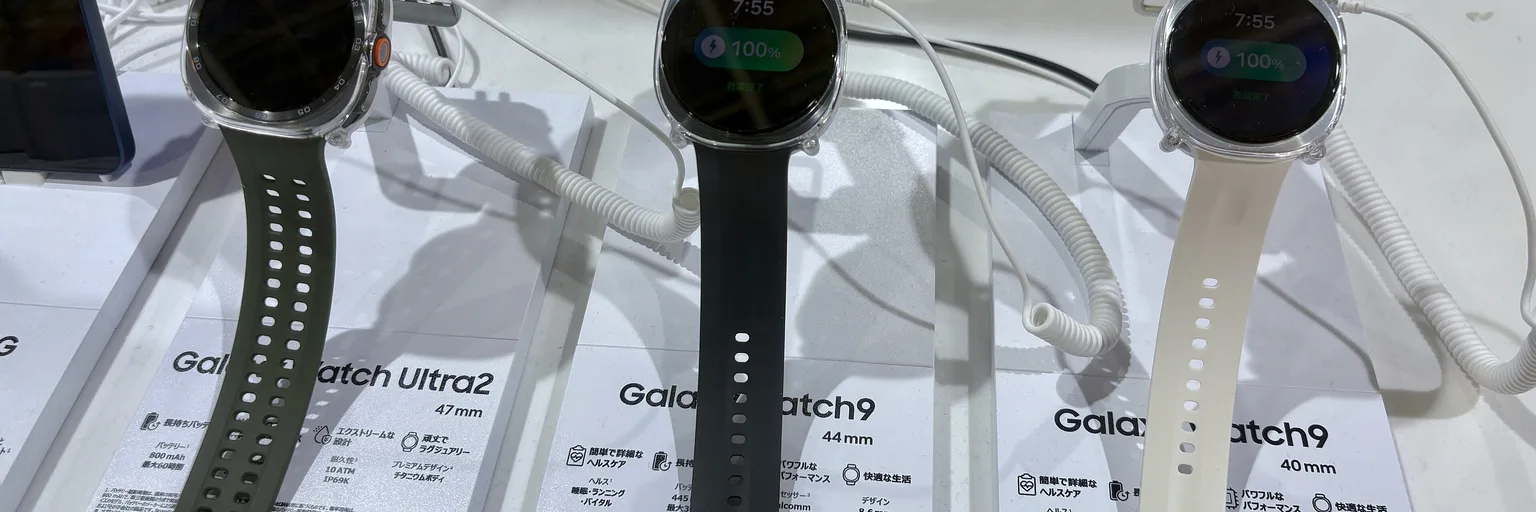
Galaxy Watch 9: A Powerful Smartwatch Hampered by Varied Battery Life
Samsung's latest wearable impresses with a potent processor and refined features, yet conflicting reports on its battery life present a complex picture for user expectations.
Wired Headphones: The Unplugged Revolution Against Digital Fatigue
The surprising comeback of wired headphones, fueled by celebrity endorsements and Gen Z's affinity for 'retro' tech, signals a profound cultural shift towards digital detox and tangible simplicity.

Google's Fitbit Edge: The Smartwatch Alternative We Need
The leaked Fitbit Edge, with its screen and impressive battery life, offers a compelling middle ground between basic fitness trackers and complex smartwatches for everyday users.

Non-Invasive Blood Sugar Tracking: The Promise Is Great, The Reality Still Lags
While the tech industry envisions wearables tracking glucose effortlessly, current devices face significant accuracy hurdles and regulatory warnings, making a truly non-invasive solution a distant goal.