Oppo F35 Pro 5G Redefines Mid-Range Battery Expectations
Oppo's new F35 Pro 5G, boasting an enormous 8,000mAh battery and rapid 80W charging, marks a significant shift, proving that exceptional endurance and quick power-ups are no longer exclusive to flagship smartphones.
Photo: SDRon Ismail Pictures / Shutterstock.com
Are we finally entering an era where battery anxiety becomes a relic of the past, even in the mid-range segment? Oppo's latest release in India, the F35 Pro 5G, certainly makes a compelling argument for it. With an imposing 8,000mAh battery and 80W SuperVOOC fast charging, this device isn't just an iterative update; it's a bold declaration that sustained power is now a cornerstone feature, democratizing capabilities often reserved for more premium price points.
Oppo officially unveiled the F35 Pro 5G, alongside the vanilla F35 5G. Both models come equipped with the impressive 8,000mAh battery, a substantial 1,000mAh increase over their F33 series predecessors, according to GSMArena. This massive power cell is paired with 80W SuperVOOC wired charging, promising a quick return to full power, with some estimates suggesting a charge from 20% to 100% in just over an hour for the F35 Pro 5G, as detailed by Gadgets Now.
The F35 Pro 5G isn't just about battery life, though. It also features a 6.78-inch OLED display with a 144Hz refresh rate, a MediaTek Dimensity 7360 MAX chipset, and a versatile 50MP main camera with OIS. Starting at Rs 45,999 in India, with pre-orders already open and availability from October 11, the F35 Pro 5G is poised to make waves in a market hungry for reliable, long-lasting devices.
The Battery Battleground Shifts to the Mid-Range
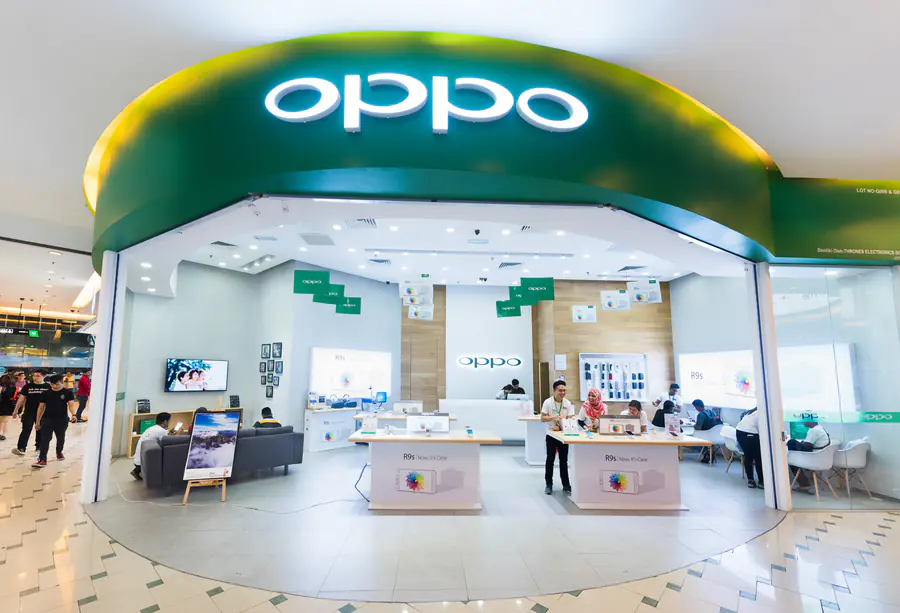
For too long, significant leaps in battery technology and charging speeds have been flagship talking points, often accompanied by premium price tags. The Oppo F35 Pro 5G directly challenges this narrative. An 8,000mAh battery isn't just large; it's bordering on tablet-sized capacity in a smartphone form factor. This isn't merely an incremental upgrade; it suggests a fundamental re-evaluation of user priorities, recognizing that enduring power is perhaps the most universally desired feature in a mobile device. Paired with 80W charging, which allows users to top up quickly, Oppo is essentially eliminating two major pain points for the average smartphone user in one fell swoop: constant anxiety over remaining charge and slow charging times. This strategic move forces competitors to acknowledge that a balanced spec sheet now must include exceptional power delivery, even in more accessible price brackets.
More Than Just Power: A Robust Feature Set
While the colossal battery is undoubtedly the headline, the F35 Pro 5G doesn't skimp on other critical features, reinforcing its position as a compelling mid-range offering. The device boasts a vibrant 6.78-inch OLED display with a silky-smooth 144Hz refresh rate, a feature that enhances the user experience for everything from scrolling social media to gaming. Its MediaTek Dimensity 7360 MAX chipset, built on a 4nm process, offers a solid foundation for daily tasks and moderate gaming, further complemented by LPDDR5X RAM and faster UFS 3.1 storage. Even the camera setup, with a 50MP main sensor featuring OIS and a 50MP ultra-wide selfie camera capable of 4K video, punches above its weight. Furthermore, the inclusion of IP69 water resistance and a 360-degree Armor Body speaks to Oppo's commitment to durability, a practical benefit often overlooked in mid-range devices.
Ultimately, the Oppo F35 Pro 5G is more than just a phone with a big battery; it represents a mature evolution of the mid-range smartphone. By integrating top-tier endurance, rapid charging, and a robust feature set, Oppo is setting a new benchmark for what users should expect without breaking the bank. For those prioritizing unwavering reliability and cutting-edge features, the F35 Pro 5G could be a smart investment, proving that flagship-level power doesn't always come with a flagship price tag.
No topics yet: start the first one.
More stories
Android's record-low Q3 share shows the RAM crisis picks winners
Android fell to 74% while iOS and HarmonyOS gained. The memory shortage punishes the cheap end of the market, and Apple's pricing power turns that scarcity into share.
The memory crisis is now your problem: plan your next phone before 2027
Phone makers are cutting 2027 targets because AI servers are eating the memory supply. Expect pricier phones, fewer cheap options and a market that favors the big players.
Huawei fights the crease, Apple hides it: only one bet can travel
The Mate X8's magnetic hinge is a bolder answer than the iPhone Duo's camouflage, but unproven durability and a China-only launch limit who can actually benefit.
3D emojis shouldn't need 6 GB of RAM: Google's Android 17 gate
Android 17 reportedly ties its new 3D emojis to 128 GB of storage and 6 GB of RAM. Unless Google shows a technical reason, that's segmentation, not engineering.