Apple’s Touchscreen Mac Could Make the iPhone Less Central
Apple’s October 28 event may introduce a touchscreen MacBook Pro, but the bigger change is strategic: Apple could finally blur the boundaries its lineup depends on.
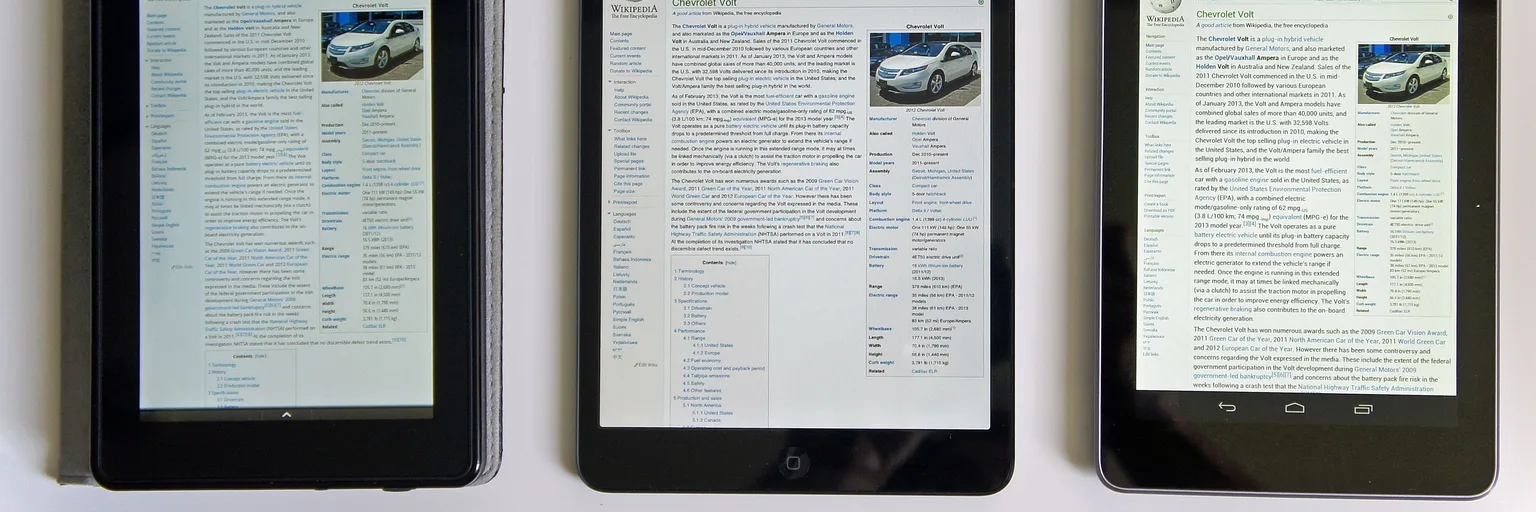
AI-generated image
A touchscreen MacBook would be a big product launch. But Apple’s willingness to launch one could be an even bigger story: the iPhone may be losing its role as the unquestioned center of Apple’s universe.
Apple has confirmed a Los Angeles media event called “Pro and Tell” for October 28, 2026, at 10:00 a.m. Pacific Time. The company has not named a product, chip, display, price, or release date. Still, multiple reports point toward new Macs, including a possible touchscreen MacBook Pro, alongside other rumored Mac and iPad updates. Engadget reports that the event will likely focus on the Mac and iPad, with a touchscreen MacBook among the expected announcements.
That distinction matters. The event is confirmed; the hardware story is not. But if the reports are right, Apple is not merely adding a display feature. It is changing the rules that separate its products.
A touchscreen Mac would complete Apple’s long convergence experiment
For years, Apple kept the iPhone, iPad, and Mac in distinct lanes. The iPhone was the pocket computer, the iPad was the touch-first middle ground, and the Mac was the traditional productivity machine built around a keyboard and trackpad. That separation was not an accident. It made the lineup easier to understand and gave each device a reason to exist.
The rumored MacBook Pro would challenge that arrangement directly. Reports describe 14-inch and 16-inch models with OLED displays and direct touch input, although Apple has confirmed none of those details. The Apple Post says the expected redesign would represent a break from Apple’s long-standing approach of keeping touch interaction on iPhone and iPad.
In our view, this is less a surrender than a completion of a strategy Apple has already been pursuing. iPadOS has moved toward external keyboards, trackpads, and more capable windowing. macOS, meanwhile, is reportedly gaining touch-oriented behavior. The two platforms have been approaching one another from opposite directions. A touch Mac would make that convergence visible instead of leaving it buried in software decisions.
The benefit for users is obvious: continuity could become more practical. A person moving between an iPhone, iPad, and Mac might encounter fewer sharp changes in how interfaces behave. Touch could be useful for quick interaction, creative work, navigation, or tasks where reaching for a trackpad feels slower than tapping the screen.
But a feature that improves continuity can also erase identity. If the Mac becomes more like an iPad, and the iPad becomes more like a Mac, Apple will have to explain why both deserve space in the same bag.
Apple may be trading simplicity for flexibility
Apple’s product lineup has never been small, but it has traditionally been legible. The basic question was often about form factor and workload: phone for mobility, tablet for touch and portability, laptop for serious work. A touchscreen Mac makes that shorthand less useful.
The problem is not that consumers will suddenly be unable to understand what a MacBook is. The problem is that more products could become technically capable of the same tasks while differing mainly in price, size, software limits, and accessories. That is a difficult buying decision even for enthusiasts. For everyone else, it risks turning Apple’s famous ecosystem into a maze of overlapping compromises.
The event may make that confusion worse if Apple presents several MacBook Pro variants at once. Current reporting expects a high-end touchscreen redesign using M5 Pro and M5 Max chips, while a separate 14-inch MacBook Pro with the standard M6 chip may also appear. Those details remain reported expectations, not confirmed specifications, but the possibility alone shows the challenge: “MacBook Pro” may soon describe machines with very different design philosophies.
A newer chip number will not answer the most important question. Buyers will need to know how touch works in macOS, whether it is genuinely useful or merely available, and how much the feature changes the price and weight of the machine. A touchscreen that exists mainly for demonstrations would be a costly way to make the lineup harder to parse.
The iPhone is still important, but it may no longer be the organizing principle
Apple’s ecosystem has often been understood through the iPhone. The phone is the device most people carry, the gateway to services, and the product that makes the rest of the lineup feel connected. A Mac with touch does not change that overnight. The event is not evidence that the iPhone is declining, and Apple has not said it is changing its platform strategy.
Still, the direction is revealing. If Apple is comfortable bringing direct touch to its most traditional computer, it is acknowledging that users care less about rigid product categories than about getting a familiar experience across screens. The center of gravity shifts from one flagship device to the ecosystem itself.
That could be good for Apple. A customer who sees the Mac, iPad, and iPhone as interchangeable parts of one computing environment may be more likely to stay inside the platform. The company can sell different devices for different moments without requiring each one to feel completely separate.
It could also weaken the old upgrade logic. If the next Mac can borrow the iPad’s touch interaction and the iPad can handle more laptop-like work, waiting becomes more attractive. Buyers may reasonably ask whether they need a new phone, tablet, or computer—or whether an existing device already covers the job.
October 28 should be treated as a buying checkpoint, not a buying signal
The smartest response is patience, not excitement. Apple’s event is confirmed, but the touchscreen MacBook Pro, OLED panel, chip combinations, model sizes, and retail timing remain part of the rumor picture. Even a reported November 6 launch window is not an official customer-availability date.
If you need a Mac now, the event does not automatically make current models bad purchases. If you can wait, however, October 28 should provide the information Apple buyers actually need: pricing, software behavior, memory and storage configurations, ports, battery claims, and the boundaries between MacBook Pro, iPad, and other Macs.
Our verdict is straightforward: a touchscreen Mac would be more important as a statement of intent than as a new feature. Apple appears willing to blur boundaries it once defended, and that could make its devices work together more naturally. But unless the company also makes the lineup easier to understand, the winner may be Apple’s ecosystem—not the customer trying to choose one device from it.
No topics yet: start the first one.
More stories
The iPhone’s NFC Wall Is Cracking, but Apple Pay Still Has the Edge
The UK wants rival wallets on the iPhone, but lower access fees alone will not create competition unless banks build services users actually want.
Siri AI is Apple’s new ‘everything tool,’ but not for everyone
Apple's latest iOS beta updates Siri with advanced AI capabilities and introduces transformative multimedia functions, signaling a strategic shift towards deeply integrated user interaction and content experiences, though not without caveats for European users.

Duo-Man: The iPhone Duo's Killer App is More Than Just Nostalgia
By transforming the iPhone Duo into a virtual Walkman where closing the device starts the music, Duo-Man brilliantly leverages foldable hardware for a unique, nostalgic, and intuitive user experience that sets a new standard for app design.

iPad mini 8's Screen: Innovation or Frustrating Compromise?
The eagerly anticipated iPad mini 8 is rumored to bring an OLED display, but the crucial question of its refresh rate remains, leaving us to wonder if it will truly elevate the compact tablet experience or merely offer a partial upgrade.