A 10,000mAh Vivo is no stunt: battery is the new spec war
Vivo's Y600 and its Guinness livestream record are more than marketing: endurance is becoming the spec that really separates phones, and it may reach some markets first.
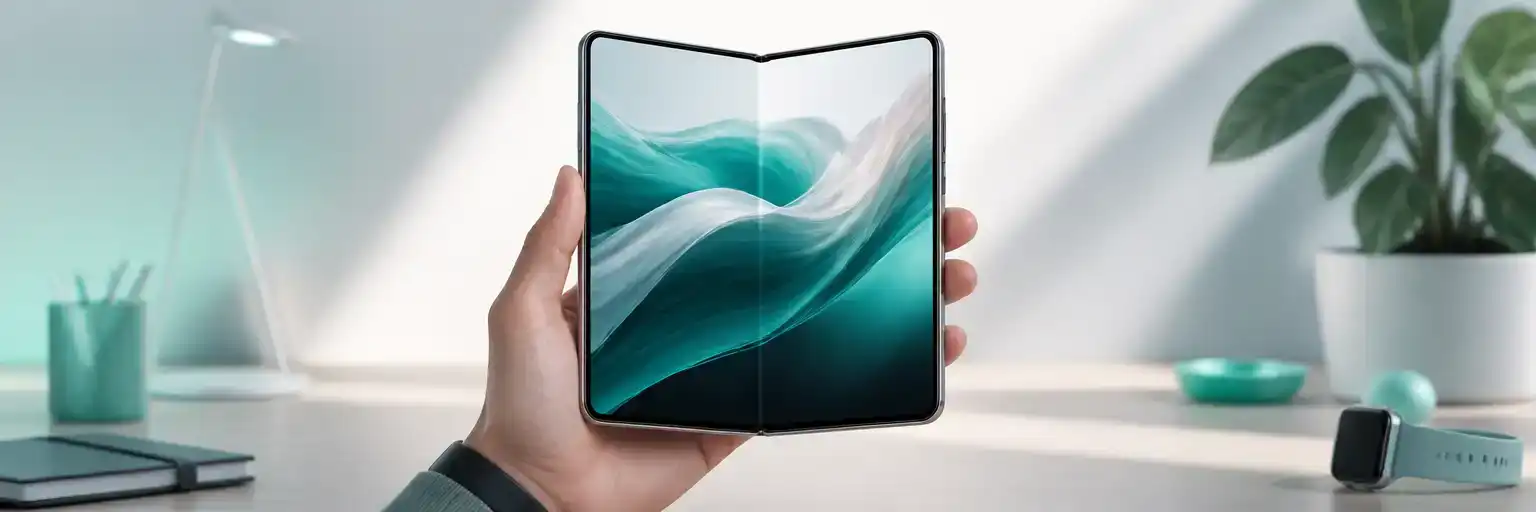
AI-generated image
When was the last time a spec sheet made you stop scrolling? Not a camera megapixel count, not a chipset name, but a number that changes your week: 10,000mAh. Vivo is about to launch another phone with that number on the box, and the Guinness stunt attached to it is easier to dismiss than the idea behind it.
The record is a gimmick, the capacity is not
The facts first. Vivo has confirmed the Y600 for China, with pre-orders on October 26 and sales from October 30, according to Notebookcheck. Per Vivo's promotional material, the phone completed a continuous livestream test of 32 hours and 37 minutes, which earned a Guinness World Records title. Price, memory configurations and availability outside China have not been announced.
Let's be honest about the record: it's a promotional test from the brand itself, and a livestream is not how anyone uses a phone. We wouldn't buy anything because of it. But the stunt works as a signal. Vivo chose to sell this phone on endurance, not on a chip or a camera, which tells you where it thinks the buyer's pain is.
Mid-range is where the battery war is being won
The Y600 isn't alone. Its sibling, the Y600 Pro, launched in China in April with a 10,200mAh cell, 8.15 mm thick and 221 grams, starting at 2099 yuan (~$306) for the 8GB + 128GB model. For context, Gizchina notes that most mid-range phones top out around 5,000-6,000mAh. Doubling that without making a brick is the real achievement.
Here our view is firm: this is where the interesting competition has moved. Flagships fight over cameras and AI features that most people use twice. A phone that, by Vivo's own claim, lasts two days, answers a problem everyone has. The Y600 Pro pairs its big cell with a Dimensity 7300e, an efficient rather than flashy chip, and that looks like the right recipe. Gizchina points to silicon-carbon chemistry as the probable enabler, though that's the outlet's inference, not something Vivo spelled out for the Y600. Ubergizmo, for its part, describes the Y600 Pro's cell as second-generation semi-solid state technology. Whatever the label, the direction is clear.
The trade-offs are real, and that's fine
Nothing is free. The Y600 Pro dropped from a 200MP main camera on its predecessor to 50MP, a cut Gizchina reads as Vivo prioritizing battery over imaging resolution. We think that's a smart trade for this segment: a 50MP sensor from a decent supplier rarely loses to a 200MP one in everyday shots, and nobody buying a phone for endurance is hunting for pixel counts.
The less comfortable part is the fine print. The Y600's own charging speed is unconfirmed. Related models differ: the Indian S2 FE is listed at 10,000mAh with 44W wired charging, while the Y600 Pro offers 90W according to Notebookcheck (other reports said 80W before launch, so treat early figures with caution). Charging a 10,000mAh cell at 44W is, in our view, a long wait, and it's the number to check before buying. Also, Notebookcheck notes Vivo hasn't detailed how the Chinese Y600 compares with the versions sold in other markets, so don't assume it's the same phone everywhere.
Buyers outside Asia may be the ones left waiting
The Y600 is linked to the Indian S2 FE and the Malaysian V80 Lite, so these big cells are showing up across several Asian markets. Meanwhile, a headline on Gizchina's news feed says Oppo's Find X10 series goes global but Europe gets smaller batteries. We haven't seen the details behind it, so we won't draw firm conclusions, and we have no data on what other brands are shipping. But if that headline reflects a pattern, it would be worth being annoyed about: the best battery hardware reaching Asia first while other markets get trimmed versions.
Our verdict
If you live in a market where the Y600 or its relatives arrive, endurance is a legitimate reason to choose it over a better-camera rival, provided charging speed and price check out. If you're elsewhere, use this as leverage: ask why your next phone has half the battery. The spec war used to be megapixels. We think it's now milliamp-hours, and it's about time.
No topics yet: start the first one.
More stories
Android’s Bluetooth lead could become the next ecosystem divide
LE Audio and Channel Sounding promise better audio and smarter proximity features on Android, but fragmented support could make Bluetooth less universal.
Android’s biggest security blind spot is the phone transfer
Seven Android transfer apps exposed private data during migration, showing why manufacturers must treat moving phones as a security operation—not a convenience feature.
Motorola Razr Flex: A bold new foldable bet, but at what cost?
Motorola's Razr Flex, appearing on Geekbench with the Snapdragon 8 Gen 5, signals an ambitious push into the premium book-style foldable market, but its processor choice suggests a nuanced strategy against established rivals.
Retroid Pocket 6: The Powerful Android Handheld That Demands Your Attention
The Retroid Pocket 6 redefines the portable gaming landscape by combining flagship Android hardware with a stunning AMOLED screen, offering a versatile experience that transcends traditional retro emulation.